

Hey there, if you're reading this, you're probably in the middle of designing your bathroom and stuck on one tiny (but super important) detail: the edge profile for your marble countertop. Let me guess-you've picked out the marble (maybe even one of our beauties like Carrara White) but now you're staring at a half-dozen edge names: eased, bullnose, bevel, ogee… what even is the difference, and does it actually matter?
As a bathroom marble countertops supplier, I get it-customers often focus on the slab's color and veining first, then glaze over the edge profile like it's a afterthought. But here's the thing: the edge profile isn't just a pretty finish. It's practical, it sets the whole vibe of your bathroom, and it can even extend the life of your countertop. Let's break this down so you don't end up with a countertop that looks great but catches on towels, chips easily, or feels weird every time you lean on it.
First, let's talk basics: what's an edge profile, anyway? It's the shaped finish along the side of your countertop's front edge (and sometimes the ends, if they're exposed). Marble is a natural stone, so cutting its edge isn't just one size fits all-each profile is milled to a specific angle, roundness, or detail, and that choice changes everything about how your countertop works and looks.
So how do you pick the right one? Let's start with the most practical factor: your bathroom's layout and daily use. No one wants a fancy edge that's impossible to keep clean, especially in a space like the bathroom where you're dealing with water, soap, and toothpaste splatters daily.


If you've got a small bathroom, or a countertop that's really tight to the wall (like in a half-bath), you don't want a super thick, rounded edge that eats up space. Think about it: a bullnose edge is rounded, which takes more depth from the countertop. If your vanity is only 21 inches deep, a 1.5-inch bullnose might make the whole vanity feel cramped. For small spaces, opt for an eased edge-it's a tiny, soft 45-degree angle, no roundness, so it stays slim. It's also way easier to wipe down-no tight corners where water or toothpaste gunk can hide. I've had customers with kids go for eased edges because they don't have little fingers stuck in the edge crevices. That's a win-win for utility and safety.
Then there's the issue of chipping. Marble is softer than granite or quartz, right? So if you've got a busy bathroom where people are grabbing the countertop constantly, or if you live in a home with lots of foot traffic, you want an edge that's less likely to chip. Sharp, square edges (called "square edge") are the thinnest, but they're also the most prone to chips-one knock with a heavy lotion bottle and you've got a tiny dent. Rounded edges like a full bullnose or a demi-bullnose are thicker, so they absorb impacts better. For example, a demi-bullnose is a medium round (half a bullnose) that's not too bulky, but sturdier than an eased edge. We've installed these in master bathrooms with double vanities where two people are brushing teeth at the same time-no chips so far, even with accidental elbow bumps.
Next up: your marble's style and your bathroom's overall design. This is where the fun part comes in-edge profiles set the tone, and you've got to match it to your stone and your space. Let's take some examples from what we stock, because that's relatable.
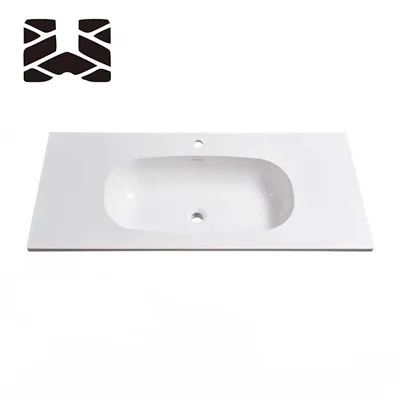
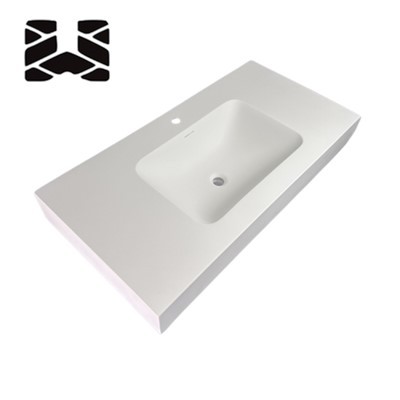
If you're into classic, timeless vibes, Carrara White marble is the go-to for most bathrooms. Its soft gray veining feels airy, so you don't want an edge that's too ornate. An eased edge or a straight bevel works here-clean, simple, and lets the marble's natural look shine. A lot of our customers pick these when they're doing a modern farmhouse or traditional bathroom. Wait, by the way, check out our Carrara White Bathroom Marble Countertop Basin if you're thinking of going that route-they're pre-cut with edges that are perfect for undermount sinks, which adds to that sleek look.
If you want a little more drama, maybe you've splurged on a luxury marble like Platinum Diamond. That stone has bold, dark gray veining that's almost metallic, so you need an edge that matches that luxury feel. A ogee edge? Oh, that's the one with that classic "S" curve along the front-super elegant, like something you'd see in a high-end hotel. It adds a touch of old-world glamour that pairs perfectly with a luxury marble slab. We've installed Bathroom Platinum Diamond Marble Countertops with ogee edges in master bathrooms with freestanding tubs-they look so cohesive, not just a random slab sitting on a vanity.
For modern bathrooms, skip the fancy curves. A straight bevel (a flat cut angled at 45 degrees) or a square edge with a "fabricated finish" (like a honed or polished top that meets the edge at a sharp line) works perfectly. It's minimalist, no extra frills, which fits the whole "less is more" vibe. We get a lot of design bloggers ordering Bathroom Luxury Marble Countertops with these edges for their sleek, Instagram-worthy bathrooms-they look crisp in photos and even better in real life.
Wait, also don't forget about the sink type if you're installing a basin or undermount. If you're going with an above-counter basin (like a vessel sink), you want an edge that leaves enough space for the basin to sit without overlapping, and that doesn't have a super high front edge that would splash water everywhere. Eased or demi-bullnose edges work best here-they're not too tall, so water doesn't spill over onto the countertop's front. If it's an undermount sink, you can get a slightly thicker edge because the sink is tucked under, so a full bullnose or bevel is fine-those look seamless when the sink is installed correctly.
Another thing people miss: the thickness of your countertop. Most marble countertops are either 2 cm (3/4 inch) or 3 cm (1 1/4 inch) thick, and that changes what edges are possible. A 2 cm slab is thinner, so you can't do a super thick bullnose-you'll end up with a tiny, flimsy round that's more prone to breaking. For 2 cm, stick with eased or bevel edges. 3 cm is the standard for most bathroom vanities, so you've got way more options: bullnose, ogee, even a double bevel (two angled edges, one on top and one on bottom) if you want a really substantial look. We always tell customers to go with 3 cm for their bathroom if their budget allows-edges look way better, and the countertop is sturdier overall.
Wait, let's talk about cost too, because that's a big one for most people. Fancier edges like ogee or double bevel take more time and skill to mill, so they're more expensive than a basic eased edge. If you're on a tight budget, you don't have to skip style-our Bathroom Natural Marble Countertops come with customizable basic edges that look way nicer than square edges, and they don't break the bank. A lot of first-time homeowners go for eased edges and then add a small detail like a pencil round (a tiny thin round on the top edge) to give it a little extra something without the cost of a major profile change.
Don't make the mistake of choosing an edge just because it looks cool in a photo. I've seen so many customers pick an ogee edge for a tiny half-bath, and then complain that it's too bulky and feels cramped. Always measure your vanity depth first, think about how you use the bathroom, and match the edge to the marble's style. If you're stuck, just ask yourself: is this edge going to be easy to clean? Does it fit the space? Does it make the marble's pattern stand out? If those three things check out, you're good.
Let's wrap this up: edge profiles are more than just a cosmetic choice. They balance practicality (cleaning, durability, space) with style (matching your marble and bathroom vibe). Whether you go for a simple eased edge, a classic bullnose, or a dramatic ogee, the right edge will make your marble countertop feel intentional, not just an afterthought.
If you're ready to start picking your edge, or you want to chat about which one would work best for your bathroom, head over to our site and browse our selection-we've got everything from Carrara White Bathroom Marble Countertop Basin to Bathroom Luxury Marble Countertops, and our team can help you narrow it down.
Let's create a bathroom you'll love for years to come-no edge regrets, just a countertop that works for you.
References:
- Marble Institute of America. (2022). Natural Stone Edge Profiles: Selection and Installation Guidelines.
- National Kitchen and Bath Association. (2023). Bathroom Vanity Design: Practical and Aesthetic Considerations for Countertop Edges.
- Stone Associates. (2021). Maintenance Tips for Marble Countertop Edges to Extend Lifespan.