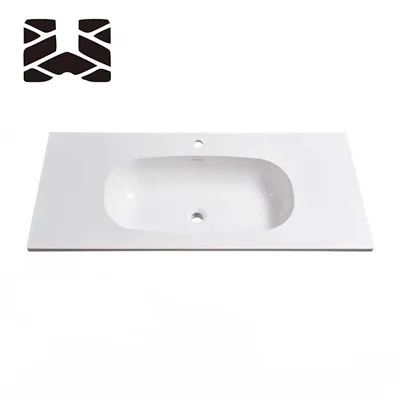


Hey everyone, I'm Jake, part of the team at a bathroom sink tops supplier that's been helping homeowners and contractors pick the right pieces for years. Today, we're diving into something I get asked about all the time: scratch resistance of different bathroom sink top materials. Let's be real, the bathroom sees a lot-from tossing makeup brushes to scrubbing toothpaste stains, even that time you dropped your tweezers (oops, guilty). Knowing how these materials hold up to tiny scratches can save you a headache later, so let's break it down like we're chatting over coffee.

First, let's start with the most popular stuff you'll spot in any home improvement store: laminate. Laminate is super affordable, easy to install, and comes in tons of colors and patterns-even ones that look like marble. But here's the thing: it's basically a paper core wrapped in a resin layer. That resin top isn't that tough. Scratches from sharp objects (like a razor blade or metal tweezers) will sink right into it, and once they're there, you can't really buff them out. I've had customers come back saying their laminate sink top got a mark after just 6 months-turns out they were using a metal nail file on the edge. So if you're someone who's rough with their bathroom items, laminate's not your best bet. It's great for rentals or budget spaces, but don't expect it to stay scratch-free long-term.

Next up: solid surface, specifically Corian. You've probably heard of Corian, it's one of the biggest names in solid surface materials. What makes Corian stand out is its non-porous, seamless design-no grout lines, easy to clean. When it comes to scratches, Corian is way better than laminate. Small scratches (like from a dropped bobby pin or a glass sliding across) can often be buffed out with a little sandpaper or a polishing compound. But wait, it's not invincible. Deep scratches from something heavy and sharp, like a pair of scissors dropped edge-down, might still leave a mark. Also, Corian's softer than natural stone, so constant dragging of hard objects over time can wear it down. If you're into the idea of a customizable sink top that's fixable if it gets scratched, check out our Corian Bathroom Sink Tops-they're a fan favorite for families because they're forgiving.

Now let's talk marble-luxury marble, specifically. A lot of people go for marble because it adds that sleek, timeless look, but there's a common misconception that all marble is the same. Let's clarify: there's natural marble, and then there's Carrara White, which is a type of natural marble, plus luxury marble blends. First, natural marble is a metamorphic rock, so its scratch resistance depends on its hardness. Marble rates around a 3 on the Mohs hardness scale (for reference, a fingernail is 2.5, a copper penny is 3.5). That means a copper penny can actually scratch it-yep, that's right. So if you drop a metal hair pin or a key on a natural marble sink top, you might see a faint scratch. Carrara White, which is a softer variety of natural marble, is even more prone to scratches because it's got finer, more porous veining. But wait, luxury marble? Some luxury marble brands use a resin infusion process that densifies the surface, making it a bit harder and more scratch-resistant than regular natural marble. It's still not as tough as quartz, but it holds up a lot better than basic natural marble. We've got Carrara White Bathroom Sink Tops and Natural Marble Bathroom Sink Tops in our lineup, but I always tell people: if you want that classic marble look but less scratch worry, our Luxury Marble Bathroom Sink Tops are treated to handle daily wear a little better.
Quartz is another big one lately, and it's hard to beat for scratch resistance. Quartz is engineered-made from crushed quartz crystals mixed with resin and pigments. It rates around a 7 on the Mohs scale, which is way higher than most other bathroom sink top materials. That means it's almost impossible to scratch with everyday items-keys, razors, even metal utensils dragged across the surface won't leave a mark. The resin binder means it's also non-porous, so no stains either. The only thing that can scratch quartz is something harder than a 7, like diamond or a carbide-tipped tool, which you're not going to drop in the bathroom. If you want peace of mind that your sink top will stay looking new for years, quartz is the way to go. It's a little pricier than laminate, but the scratch resistance makes it worth it for many homeowners.
Wait, let's not forget about porcelain or ceramic sink tops (sometimes called vitreous china). These are the classic white sink tops you see in old homes or budget-friendly installs. Porcelain is fired clay, so it's tough, but it can chip if you drop something heavy-like a toothbrush holder or a vase. As for scratches, it's better than laminate and marble, but not as good as quartz. A metal can dropped edge-down might leave a tiny scratch, but it's usually less noticeable than on other materials. The downside is, if it does chip, it's hard to repair without it looking obvious, and deep scratches can stain over time. Our White Bathroom Sink Top collection includes porcelain options for anyone who loves that bright, clean look without the luxury price tag.
Now, let's put this all into perspective so you can make a choice that fits your lifestyle. If you're a renter on a tight budget, laminate's okay-just be gentle with it. If you want something you can fix if it gets scratched, go with Corian. If you're obsessed with marble and don't mind the tiny, faint scratches that come with it (they're part of the charm, right?), check out our natural or luxury marble options. If you have kids or tend to be a little clumsy in the bathroom, quartz is your best bet for scratch resistance. And if you love that classic white look without the fuss, porcelain is solid.
I should also mention a few quick tips to keep any sink top from scratching faster. First, use a soft mat in the sink for washing dishes or makeup brushes-dragging hard objects on the edge or bottom of the sink is a big cause of scratches. Second, avoid using abrasive cleaners like steel wool or scouring pads-they'll scratch the surface over time, even on tough materials. Third, if you do get a scratch, act fast-small ones on solid surface or quartz can be buffed out, but deep ones might need a pro.
At the end of the day, the best material for you depends on how much you use your bathroom, how careful you are, and what your budget is. We've got all these options in our inventory, and our team is always here to walk you through the pros and cons of each. Whether you're remodeling a small powder room or a master bathroom, we can help you find a sink top that fits your needs. If you're ready to chat about what material makes sense for your project, feel free to reach out to us for a purchasing consultation. No pressure, just straight talk about what works and what doesn't.
Now, let's wrap this up with some quick references so you can dive deeper if you want. Keep in mind, these are from industry experts, so they're a good backup for any questions you might have later.
References:
- National Tile Contractors Association. (2022). "Natural Stone Durability and Maintenance." NTCA Publications.
- DuPont Corian. (2023). "Corian Solid Surface Scratch Resistance and Repair Guide." DuPont Technical Resources.
- Marble Institute of America. (2021). "Marble Mohs Hardness and Wear Characteristics." MIA Industry Reports.
- Quartz Corp. (2022). "Engineered Quartz Material Performance Standards." Quartz Industry Technical Data.
- Porcelain Manufacturers Association. (2023). "Vitreous China Sink Top Durability Testing." PVMA Product Bulletins.