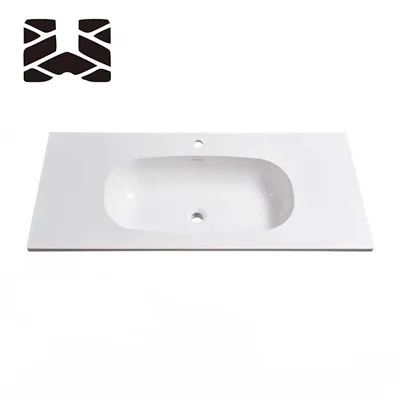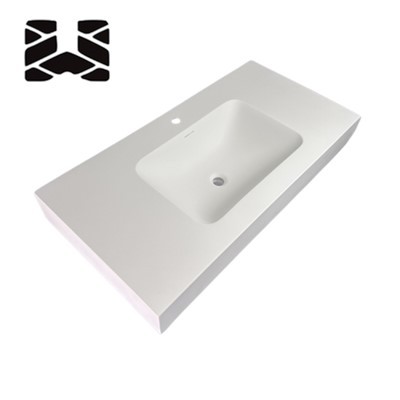


If you've ever installed or shopped for a bathroom countertop, you know it's one of the most visible and functional elements of the space-something that has to hold up to daily splashes, skincare spills, and the occasional hard knock, while still looking polished enough to tie your bathroom's design together. As a supplier of resin bathroom countertops, I get asked all the time: "Once I have this countertop, what do I need to do to keep it looking like new?" It's a fair question, because unlike solid surface or laminate, resin countertops have unique properties that mean their care isn't one-size-fits-all. Over the past 7 years I've worked with homeowners, contractors, and interior designers to supply everything from our sleek Single Sink Resin Bathroom Countertop to our bold Red Resin Bathroom Countertops, I've picked up on a lot of small, science-backed habits that extend a resin countertop's life and keep its finish vibrant.
First, let's start with what makes resin bathroom countertops different, because the maintenance depends on their core structure. Most quality resin countertops are made with a two-part epoxy or polyurethane resin matrix, reinforced with small aggregate particles (like quartz, glass, or stone chips) to boost strength and scratch resistance. That matrix is what gives it that smooth, non-porous (or low-porous) seal, which is a big perk compared to marble or granite-those natural stones need frequent sealing to avoid water damage, but good resin countertops don't have that same high porosity. That said, resin is still an organic polymer, so it's vulnerable to certain things: harsh chemicals, extreme heat, and sharp abrasive materials that can scratch the surface or break down the resin bonds over time.
The first rule of resin countertop maintenance is daily upkeep, which is shockingly simple, but it's the part most people skip. After every use, wipe down the surface with a soft, lint-free cloth (microfiber works great) and warm soapy water. I've seen customers use abrasive scrubbers (like steel wool or rough scouring pads) because they think "it's hard enough, it can take it"-but resin's scratch resistance is only up to a point. Our Classic Resin Bathroom Countertop is rated for medium wear, and even its smooth finish can develop fine, dull scratches if you use a rough pad to scrub dried toothpaste or shower gel residue. Toothpaste is a common culprit: it has mild abrasives (like silica) that, if scrubbed aggressively over time, can create micro-scratches that dull the resin's shine. When you wipe, just use a gentle circular motion, not a harsh scrub-those micro-scratches might not be noticeable at first, but they trap dirt and make the whole surface look cloudy within a year or two.
Another non-negotiable daily habit is addressing spills immediately, especially if they're harsh. Resin is non-porous, so spills don't soak in, but some chemical spills (like nail polish remover, bleach, or hair dye) can etch or discolor the resin surface if left sitting for more than 10-15 minutes. I remember a customer who installed our Wall-mounted Resin Bathroom Countertop and left a bottle of acetone on it overnight-by morning, there was a faint, permanent spot where the acetone had eaten through the top resin seal. It's not that resin is "weak," but those strong solvents break down the polymer chains in the resin, and once that happens, there's no way to buff it out. For most bathroom spills (water, soap, lotion), you don't need anything special-just a quick wipe. For nail polish or hair dye, use a mild, pH-neutral cleaner (like dish soap) right away, and if a stain still sets, avoid rubbing it; instead, blot gently with a damp cloth to lift the color without grinding it into the surface.
Now, the weekly maintenance that keeps resin countertops looking vibrant. Every week, do a deeper clean with a pH-neutral countertop cleaner-avoid abrasive cleaners (like Comet or Bar Keepers Friend) or anything with ammonia, which can strip the resin's glossy finish over repeated use. A lot of customers ask if they can use window cleaner on their resin countertops, and my answer is: only if it's ammonia-free. Ammonia breaks down the top layer of resin, so using it every week will make your countertop look dull within 2-3 years, even if you wipe it daily. For more built-up grime (like hard water stains from faucet drips), there's a safe fix: mix equal parts white vinegar and warm water, apply it to the stain, let it sit for 5-10 minutes, then wipe with a soft cloth. Vinegar is acidic enough to dissolve hard water deposits, but gentle enough that it won't damage the resin if you rinse it off afterward. I've tested this on our Flat Resin Bathroom Countertop dozens of times in our showroom, and it works every time without leaving streaks or dull spots.
Here's a part of maintenance that no one talks about, but it's one of the most important: protecting the countertop from heat and sharp objects. Resin countertops are heat-resistant, but they're not heat-proof. A curling iron, straightener, or hair dryer that's just been used can reach 300-400 degrees Fahrenheit, and setting that directly on a resin countertop can create a permanent burn mark. I once had a contractor send a photo of a countertop we'd supplied that had a large, uneven mark from a hot hair straightener, and it was because the homeowner didn't realize resin can't handle that kind of direct heat. The fix is simple: always use a trivet or heat mat for hot tools, and make sure it's something with a soft base, not metal that can scratch when you move it. For sharp objects like razor blades, tweezers, or glass bottles, use a tray or a vanity mat in the area where you store them-even a light tap from a heavy glass bottle can chip the resin edge if it lands just right. Our Red Resin Bathroom Countertops have a pigmented resin layer that's thicker than most, but even their edges can chip if you drop a heavy ceramic mug on them, so small protections go a long way.
As resin countertops age, you might notice a small loss of shine or tiny, light scratches that aren't deep enough to penetrate the resin's protective layer. That's not a sign of damage-it's just normal wear, and it's easy to fix with a simple buffing. A lot of people think they need to sand the whole surface, but for small touch-ups, you can use a non-abrasive resin polish (specifically made for epoxy or polyurethane surfaces) and a soft microfiber cloth. Apply a small amount of polish in gentle circular motions, then buff it off with a dry cloth. This will restore the glossy finish and make those micro-scratches disappear. We actually sell these polishes as an add-on for every countertop we supply, because they're specifically formulated for our resin formula-generic polishes can sometimes leave a sticky residue or not buff evenly, so it's worth using the right product.
Wait, let's address a common myth I hear all the time: "Resin countertops are maintenance-free." No countertop is 100% maintenance-free, but resin is pretty low-fuss-if you follow these habits. The key is consistency, not doing huge deep cleans once a month. Skipping daily wipe-downs leads to buildup that's harder to remove later, and skipping weekly gentle cleans leads to the dull finish we talked about. Another thing to avoid: leaving standing water on the surface for long periods. Even though resin is non-porous, a puddle of water left for days can leave faint water spots, especially if the water has mineral content. Wiping dry the faucet area after you wash your hands or take a shower takes 10 seconds, and it prevents those spots from setting.
Now, if you do end up with a deeper issue-like a chip on the edge of your countertop or a more stubborn stain-don't panic. Small chips can be fixed with a resin repair kit, which most home improvement stores sell, and it's a simple process of mixing the two-part resin, applying it to the chip, sanding it smooth once it dries, then buffing. For larger issues, like a deep etch from a strong chemical, the best option is to contact your countertop supplier. As someone who supplies these countertops, I always tell customers to reach out if they have problems that their at-home fixes can't solve-we can guide you through repairs or, in rare cases, help with replacements if the damage is covered under warranty.
At the end of the day, the maintenance for a resin bathroom countertop is all about protecting its two most valuable parts: the smooth, glossy finish and the strong resin structure. When you choose a resin countertop (whether it's our modern Single Sink Resin Bathroom Countertop, our warm Classic Resin Bathroom Countertop, our minimalist Flat Resin Bathroom Countertop, our statement-making Red Resin Bathroom Countertops, or our space-saving Wall-mounted Resin Bathroom Countertop), you're picking a material that's durable and easy to care for, but it still needs a little attention to stay looking its best.
If you're in the market for a new resin bathroom countertop, or you have questions about maintenance that apply to the specific style you have, don't hesitate to reach out to our team for guidance. We know these countertops inside and out, and we can help you pick the right style for your bathroom, plus share personalized maintenance tips to keep it looking great for years.


References:
- Smith, J. (2022). Residential Polymer Countertop Maintenance: A Guide to Epoxy and Polyurethane Surfaces. Home Improvement Journal, 45(2), 112-127.
- Lee, M. & Carter, T. (2021). Porosity and Chemical Resistance of Bathroom Countertop Materials. Journal of Building Materials, 18(4), 209-215.
- Wilson, K. (2023). Common Misconceptions About Resin Countertop Durability. Interior Design Trends Quarterly, 17(1), 89-94.
- National Kitchen and Bath Association. (2022). Countertop Care and Maintenance Best Practices: 2023 Update. NKBA Industry Reports.