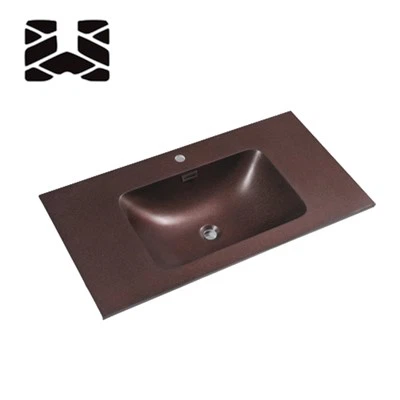


When it comes to designing a bathroom, the countertop is one of the most crucial elements. It not only serves as a functional surface for daily use but also significantly impacts the overall aesthetic of the space. As a leading bathroom countertop supplier, I have witnessed firsthand the diverse preferences and requirements of customers. In this blog, I will explore the commonly used materials for bathroom countertops, highlighting their features, advantages, and limitations to help you make an informed decision for your bathroom renovation or new construction project.
1. Natural Stone
Natural stone countertops are a timeless choice that exudes elegance and sophistication. They are known for their durability, unique patterns, and high-end appeal, making them a popular option among homeowners and designers alike.
Granite
Granite is one of the most widely used natural stones for bathroom countertops. It is a hard, igneous rock that is highly resistant to scratches, heat, and stains. Granite comes in a wide range of colors and patterns, from subtle earth tones to bold, dramatic veining. Each slab is unique, adding a touch of natural beauty to any bathroom.
One of the main advantages of granite is its durability. It can withstand the daily wear and tear of bathroom use, including heavy objects, hot curling irons, and abrasive cleaners. However, granite is a porous material, which means it needs to be sealed regularly to prevent staining and water damage. With proper care and maintenance, a granite countertop can last a lifetime.
Marble
Marble is another luxurious natural stone option for bathroom countertops. It is a metamorphic rock that is prized for its smooth texture, soft veining, and classic white or cream color. Marble adds a touch of opulence and elegance to any bathroom, creating a spa-like atmosphere.
While marble is beautiful, it is also more delicate than granite. It is softer and more prone to scratching and etching, especially when exposed to acidic substances such as lemon juice or vinegar. However, many people appreciate the natural patina that develops over time, which adds character and charm to the countertop. Like granite, marble also needs to be sealed regularly to protect it from stains and moisture.
Quartzite
Quartzite is a relatively new entrant in the natural stone market, but it has quickly gained popularity for its durability and beauty. It is a metamorphic rock that is formed from sandstone under high heat and pressure. Quartzite is extremely hard and resistant to scratches, heat, and stains, making it an ideal choice for bathroom countertops.
Quartzite has a similar appearance to marble, with beautiful veining and a smooth, polished finish. However, unlike marble, it is less prone to etching and staining, making it a more practical option for high-traffic bathrooms. Quartzite also comes in a variety of colors and patterns, allowing you to find the perfect match for your bathroom design.
2. Engineered Stone
Engineered stone countertops are a popular alternative to natural stone. They are made from a combination of crushed stone, resin, and pigments, which are mixed together and pressed into slabs. Engineered stone offers many of the same benefits as natural stone, such as durability and beauty, but with some additional advantages.
Quartz
Quartz countertops are one of the most popular types of engineered stone. They are made from up to 93% natural quartz, which is one of the hardest minerals on earth. The remaining 7% consists of resin and pigments, which give the countertop its color and pattern.
Quartz countertops are highly resistant to scratches, stains, and heat. They do not require sealing, making them a low-maintenance option for busy bathrooms. Quartz comes in a wide range of colors and patterns, including realistic imitations of natural stone such as granite and marble. It is also non-porous, which means it is resistant to bacteria and mold growth, making it a hygienic choice for bathrooms.


Solid Surface
Solid surface countertops are another type of engineered stone that is commonly used in bathrooms. They are made from a combination of acrylic resin, polyester resin, and natural minerals, which are blended together to create a seamless, non-porous surface.
Solid surface countertops are extremely versatile and can be fabricated into any shape or size. They are available in a wide range of colors and patterns, and can be customised to match the specific design requirements of your bathroom. Solid surface is also heat-resistant and can be repaired if it gets scratched or damaged. However, it is not as hard as quartz or natural stone, and may be more prone to scratching and scorching.
3. Laminate
Laminate countertops are a cost-effective option for bathrooms. They are made from layers of paper or fabric that are saturated with resin and bonded to a particleboard or MDF core. Laminate is available in a wide range of colors, patterns, and textures, including realistic imitations of natural stone and wood.
One of the main advantages of laminate is its affordability. It is significantly less expensive than natural stone or engineered stone, making it a popular choice for budget-conscious homeowners. Laminate is also easy to clean and maintain, and is resistant to stains and scratches. However, it is not as durable as natural stone or engineered stone, and may be more prone to chipping and peeling over time.
4. Wood
Wood countertops can add a warm, natural touch to a bathroom. They are available in a variety of woods, including oak, maple, cherry, and teak, each with its own unique color and grain pattern. Wood is a renewable resource, making it an environmentally friendly choice for bathroom countertops.
One of the main advantages of wood is its aesthetic appeal. It adds a sense of warmth and character to any bathroom, creating a cozy and inviting atmosphere. Wood is also a relatively soft material, which means it is more comfortable to work on than hard surfaces such as stone or laminate. However, wood is porous and can absorb water, which means it needs to be sealed and maintained regularly to prevent warping, splitting, and rotting.
5. Resin
Resin countertops are a modern and stylish option for bathrooms. They are made from a combination of resin and pigments, which are poured into a mold and cured to create a solid, non-porous surface. Resin countertops are available in a wide range of colors, patterns, and finishes, including glossy, matte, and textured.
One of the main advantages of resin is its versatility. It can be fabricated into any shape or size, and can be customised to match the specific design requirements of your bathroom. Resin is also non-porous, which means it is resistant to stains, bacteria, and mold growth. It is also easy to clean and maintain, and can be repaired if it gets scratched or damaged.
As a bathroom countertop supplier, we offer a wide range of resin countertops, including the Classic Resin Bathroom Countertop, Pearl White Resin Bathroom Countertop, and Small Resin Bathroom Countertop. These countertops are not only beautiful but also durable and functional, making them an ideal choice for any bathroom.
6. Other Materials
In addition to the materials mentioned above, there are several other materials that can be used for bathroom countertops, including concrete, glass, and metal.
Concrete
Concrete countertops are a popular choice for modern and industrial-style bathrooms. They are made from a mixture of cement, sand, gravel, and water, which is poured into a mold and cured to create a solid, durable surface. Concrete countertops can be customised with a variety of colors, textures, and finishes, and can be stamped or engraved to create unique patterns and designs.
One of the main advantages of concrete is its durability. It is resistant to scratches, heat, and stains, and can withstand the daily wear and tear of bathroom use. Concrete is also a sustainable material, as it can be made from recycled materials. However, concrete is a porous material, which means it needs to be sealed regularly to prevent staining and water damage.
Glass
Glass countertops are a unique and modern option for bathrooms. They are made from tempered or laminated glass, which is strong and durable. Glass countertops are available in a variety of colors, thicknesses, and finishes, and can be customised to match the specific design requirements of your bathroom.
One of the main advantages of glass is its transparency. It can create a sense of openness and spaciousness in a bathroom, making it appear larger and more airy. Glass is also easy to clean and maintain, and is resistant to stains and bacteria. However, glass is a fragile material, and may be more prone to breaking than other types of countertops.
Metal
Metal countertops, such as stainless steel and copper, are a popular choice for contemporary and industrial-style bathrooms. They are strong, durable, and resistant to scratches, heat, and stains. Metal countertops are available in a variety of finishes, including brushed, polished, and hammered, and can be customised to match the specific design requirements of your bathroom.
One of the main advantages of metal is its durability. It can withstand the daily wear and tear of bathroom use, and is resistant to rust and corrosion. Metal is also easy to clean and maintain, and can be disinfected with a simple wipe-down. However, metal can be noisy when objects are placed on it, and may not be as comfortable to work on as other types of countertops.
Conclusion
Choosing the right material for your bathroom countertop is an important decision that can have a significant impact on the look and functionality of your bathroom. Each material has its own unique features, advantages, and limitations, so it is important to consider your budget, style preferences, and lifestyle needs when making your choice.
As a bathroom countertop supplier, we are committed to providing our customers with high-quality products and exceptional service. Whether you are looking for a classic natural stone countertop, a modern engineered stone countertop, or a unique resin countertop, we have the expertise and resources to help you find the perfect solution for your bathroom.
If you are interested in learning more about our bathroom countertop products or would like to discuss your project with one of our experts, please contact us. We look forward to the opportunity to work with you and help you create the bathroom of your dreams.
References
- Elsevier, Materials Science and Engineering Books
- ASM International Handbook Committee, ASM Handbook: Properties and Selection: Nonferrous Alloys and Special-Purpose Materials