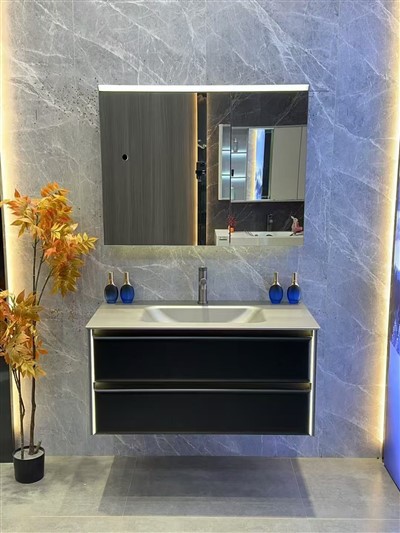


Sintered Stone for Bathrooms is a high-performance artificial stone designed for humid environments such as toilets and bathrooms. It combines the superior physical properties of sintered stone with the special needs of bathroom space.
The following is a comprehensive analysis of sintered stone for bathrooms:
1. The core advantages of sintered stone for bathrooms
| Features | Description |
| Waterproof and moisture-proof | Water absorption rate <0.1%, completely eliminating water seepage and mold problems, better than natural stone and ordinary tiles. |
| Antibacterial and antifouling | The surface is dense and non-porous, bacteria (such as E. coli, mold) are difficult to breed, and easy to clean. |
| Chemical corrosion resistance | Resistant to erosion by daily chemical products such as shower gel, shampoo, and detergent. |
| Strong impact resistance | Mohs hardness level 6-7, not easy to scratch or break, suitable for high-frequency bathroom scenes. |
| Aesthetics | It can imitate high-end textures such as marble, wood grain, cement, etc., achieve seamless splicing, and enhance the overall sense. |
2. Common applications of sintered stone in bathrooms

(1) Bathroom countertops & wash basins
Advantages: One-piece design, no joints, to prevent glass glue from getting moldy.
Resistant to corrosion by cosmetics (such as nail polish, perfume).
Examples: Floating countertops, embedded under-counter basins.
(2) Shower room walls & floors
Advantages: Anti-slip surface treatment (matte or anti-slip groove design).
Resistant to high-temperature water vapor, no deformation after long-term use.


(3) Bathtub perimeter & niches
Advantages: Large-size plates (such as 1200×2400mm) reduce joints, beautiful and easy to clean.
Customizable special-shaped cutting to match curved bathtubs.
(4) Toilet background wall & dry area wall
Design trends: Minimalist styles such as imitation rock texture and matte solid color.

Summary: Bathroom sintered stone is becoming the preferred material for high-end bathroom decoration due to its zero permeability, high hardness and easy cleaning, especially for users who pursue minimalist design and long-term durability. Although the price is higher than ceramic tiles, the long-term maintenance cost is low, which is a rational investment for quality bathroom.