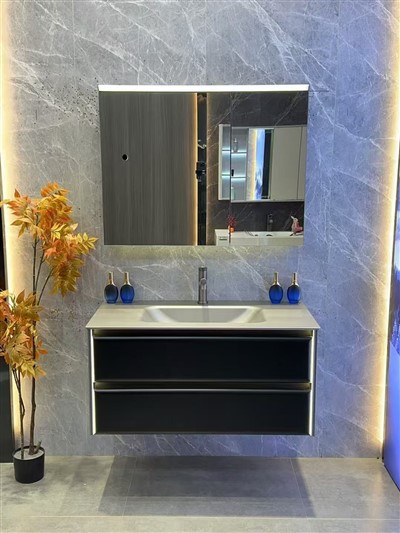


A metal frame bathroom vanity is a vanity unit that uses a steel or aluminum structural frame as its primary load-bearing component, combined with wood, glass, or stone panels for aesthetics and function. Metal frame construction offers superior structural strength, corrosion resistance, and design versatility compared to all-wood construction, making it the preferred choice for floating installations, heavy stone countertops, and demanding commercial environments. For B2B buyers serving the hospitality, commercial, and luxury residential sectors, metal frame bathroom vanities deliver a compelling combination of industrial-chic aesthetics and engineering reliability. This guide covers structural engineering, materials, finishing, commercial applications, and sourcing strategies.
What Is a Metal Frame Bathroom Vanity?
A metal frame bathroom vanity replaces the traditional all-wood cabinet box with a precision-engineered metal framework that provides the primary structural support. This frame is typically fabricated from steel tubing (rectangular or square profiles) or extruded aluminum, welded or mechanically fastened at joints, and finished with corrosion-resistant coatings. Wood panels, stone tops, glass doors, or metal mesh are attached to the frame to create the finished vanity.
The metal frame approach offers several fundamental engineering advantages over conventional all-wood construction. Steel has a tensile strength approximately 20 times greater than wood, meaning a metal frame can support the same load with a significantly slimmer profile. This structural efficiency enables floating vanity designs that appear visually lighter while supporting heavy stone countertops - a combination that is structurally challenging with all-wood construction.
Key Components of a Metal Frame Bathroom Vanity
Structural frame: Welded steel or bolted aluminum tubing - the primary load-bearing element
Wall-mounting system: Heavy-duty brackets, concealed fasteners, or French cleats rated for the total vanity load
Panel system: Wood, glass, or metal panels attached to the frame with mechanical fasteners or adhesives
Countertop support: Integrated ledge or bracket system within the frame to support stone tops
Drawer and door hardware: Mounted directly to the metal frame for maximum rigidity
Leveling system: Adjustable feet (for floor-standing models) or adjustable wall brackets (for floating models)
Structural Engineering: Why Metal Frames Outperform Wood
The structural superiority of metal frame construction is rooted in the fundamental material properties of steel and aluminum compared to wood. For B2B buyers specifying vanities for commercial or heavy-use applications, understanding these engineering principles is essential for making informed product selections.
Material Properties Comparison
|
Property |
Steel |
Aluminum |
Solid Wood (Oak) |
|
Tensile Strength |
400-550 MPa |
200-300 MPa |
90-100 MPa |
|
Elastic Modulus |
200 GPa |
70 GPa |
11 GPa |
|
Density |
7.85 g/cm3 |
2.70 g/cm3 |
0.75 g/cm3 |
|
Strength-to-Weight |
Moderate |
Excellent |
Good |
|
Corrosion Resistance |
Good (with coating) |
Excellent (natural) |
Good (with finish) |
|
Dimensional Stability |
Excellent |
Excellent |
Moderate (moves with humidity) |
The practical implications of these material properties are significant for bathroom vanity performance. Steel's high elastic modulus (200 GPa vs. wood's 11 GPa) means a metal frame will not sag, creep, or deflect under load - even when supporting a 200+ pound sintered stone countertop over a 72-inch span. Wood, by comparison, will gradually deflect under sustained load, particularly in high-humidity bathroom environments where wood's moisture content fluctuates.
Load-Bearing Capacity for Floating Installations
Floating bathroom vanities place extraordinary demands on their structural system. A typical 60-inch floating vanity with a sintered stone top can weigh 250-350 pounds, and this entire load must be transferred through the wall-mounting brackets into the wall structure. Metal frame construction handles this load with engineering confidence:
Steel frame capacity: A properly engineered steel frame can support 500+ pounds in a floating configuration, providing a 2:1 safety factor for typical vanity loads.
Bracket system: Metal frames use integrated heavy-duty brackets (typically 4-6 brackets for a 60-inch vanity) that distribute load across multiple wall studs.
Deflection control: Metal frames limit deflection to less than 1/4 inch over a 60-inch span under full load - virtually imperceptible and far superior to wood construction.
Fatigue resistance: Steel does not creep or fatigue under sustained load, ensuring the vanity remains level and secure for decades.
Metal Frame Materials and Corrosion Protection
The bathroom environment is inherently corrosive - high humidity, temperature fluctuations, water exposure, and cleaning chemicals create conditions that can degrade unprotected metals. Selecting the right metal and corrosion protection system is critical for ensuring long-term performance in bathroom applications.
Steel vs. Aluminum for Bathroom Vanity Frames
Steel: Higher strength and stiffness, lower cost, requires protective coating for corrosion resistance. Ideal for heavy-load applications and cost-sensitive projects.
Aluminum: Natural corrosion resistance (aluminum oxide layer), lighter weight, higher material cost. Ideal for humid environments and premium applications where weight matters.
Stainless steel: Ultimate corrosion resistance without coating, premium aesthetic, highest cost. Ideal for luxury and ultra-humid environments.
Powder Coating: The Standard Corrosion Protection System
Powder coating is the industry-standard finish for steel bathroom vanity frames. This process involves applying dry polymer powder electrostatically to the metal surface and then curing it at high temperatures (180-220 degrees Celsius) to form a durable, uniform coating. For bathroom applications, powder coating provides:
Corrosion resistance: Properly applied powder coating provides 500+ hours of salt spray resistance, far exceeding bathroom humidity demands.
Chemical resistance: Withstands cleaning chemicals, cosmetics, and personal care products without degradation.
Color versatility: Available in any RAL color, enabling exact brand color matching and design flexibility.
Finish options: Matte, satin, gloss, and textured finishes to complement any design aesthetic.
Chip resistance: More durable than liquid paint, with typical coating thickness of 60-80 microns.
Surface Finish Options for Metal Frames
Matte black: Dramatic, modern finish popular in contemporary designs; pairs with warm wood panels
Brushed brass / champagne bronze: Warm metallic finishes trending for 2026-2027; complements organic minimalism
Clear coat (raw steel look): Preserves the natural industrial aesthetic of bare metal with protective clear coating
White and neutral tones: Blends with bathroom color schemes for a seamless, integrated appearance
Custom RAL colors: Brand-specific colors for OEM projects requiring exact color matching
Commercial Applications: Where Metal Frame Vanities Excel
Metal frame bathroom vanities are particularly well-suited for commercial and hospitality environments where structural reliability, design impact, and low maintenance are paramount. Understanding the specific applications where metal frame construction provides the greatest advantage helps B2B buyers target the right market segments.
Boutique Hotels and Luxury Resorts
Boutique hotels and luxury resorts increasingly specify metal frame bathroom vanities as a design differentiator. The industrial-chic aesthetic of exposed metal frames - particularly in matte black or brushed brass - creates a memorable visual statement that distinguishes the property from competitors using conventional wood vanities. For floating installations in hotel rooms, metal frame construction provides the structural confidence to support heavy stone tops wall-mounted at comfort height, creating the spacious, modern bathroom aesthetic that luxury travelers expect.
Restaurant and Retail Washrooms
Modern restaurants and premium retail spaces use restroom design as a brand extension, and metal frame vanities support this strategy. The durability of metal construction withstands the heavy use and occasional abuse of public restrooms, while the design versatility - combining metal frames with stone tops, glass shelving, or metal mesh door panels - enables washroom designs that reinforce the establishment's brand identity. Powder-coated finishes resist the aggressive cleaning chemicals used in commercial cleaning protocols.
Office Buildings and Corporate Facilities
Premium office buildings are upgrading restroom facilities as part of amenity strategies to attract and retain tenants. Metal frame vanities in these environments project quality and modernity while requiring minimal maintenance. The structural durability of metal construction ensures that vanities remain secure and functional even in high-traffic facilities serving hundreds of daily users.
Luxury Residential Developments
High-end condominium developments and custom luxury homes specify metal frame vanities for their design impact and engineering reliability. The floating metal frame aesthetic aligns with contemporary architectural preferences, while the structural performance provides confidence for master bathroom installations featuring large-format stone tops and integrated storage.
Design Versatility: Aesthetic Options with Metal Frame Construction
One of the most compelling advantages of metal frame bathroom vanities is their extraordinary design versatility. The metal frame serves as a structural chassis that can be paired with virtually any panel material, countertop, and hardware combination, enabling B2B buyers to offer highly differentiated product lines from a single manufacturing platform.
Panel Material Options
Solid wood panels: White oak, walnut, or maple panels inset within the metal frame, combining structural strength with natural warmth.
Glass panels: Tempered glass door panels and shelving for a light, transparent aesthetic.
Metal mesh panels: Woven wire mesh door panels for industrial design themes.
Stone panels: Thin stone veneer panels for monolithic, luxury appearance.
Mixed materials: Combine wood doors with metal frame, glass shelving, and stone tops for layered visual complexity.
Countertop Integration
Metal frame vanities accommodate all countertop materials, with the frame providing superior support for heavy stone options:
Sintered stone: Ideal pairing - metal frame easily supports the weight; non-porous surface complements the low-maintenance metal aesthetic.
Quartz: Consistent, engineered surface; metal frame provides dimensional stability for precise countertop alignment.
Marble: Luxury natural stone; metal frame ensures the vanity remains level despite marble's weight.
Concrete: Industrial aesthetic that pairs naturally with metal frame construction.
Sourcing Metal Frame Bathroom Vanities: B2B Guide
Sourcing metal frame bathroom vanities requires a manufacturing partner with specific metal fabrication capabilities - welding, powder coating, and precision assembly - in addition to traditional woodworking skills. Not all bathroom vanity manufacturers have invested in the equipment and expertise required for quality metal frame production.
Key Sourcing Criteria for Metal Frame Vanities
Metal fabrication capability: Verify the manufacturer has welding equipment (MIG/TIG), tube bending, and precision cutting capabilities.
Powder coating facility: Ideally, the manufacturer should have an in-house powder coating line for quality control and color consistency.
Engineering capability: The manufacturer should be able to calculate load ratings, specify bracket systems, and engineer floating installations.
Assembly expertise: Combining metal frames with wood panels and stone tops requires precise tolerance management - verify the manufacturer's assembly quality through samples.
Corrosion testing: Request salt spray test results for powder-coated frames to verify corrosion resistance claims.
Certification: Verify that metal components meet relevant structural and safety standards for your target market.
OEM/ODM Capabilities for Metal Frame Vanities
LEVI Decor offers comprehensive OEM and ODM services for metal frame bathroom vanities, combining metal fabrication expertise with solid wood, sintered stone, and mixed-material capabilities:
Full metal frame engineering and fabrication - steel, aluminum, and stainless steel options
In-house powder coating in any RAL color with matte, satin, gloss, or textured finishes
Custom frame dimensions for any vanity size from 24 to 84 inches
Floating and floor-standing configurations
Panel material options: solid wood, glass, metal mesh, and stone veneer
Countertop integration: sintered stone, quartz, marble, granite, and concrete
Hardware customization: brushed brass, champagne bronze, matte black, and custom finishes
Sample turnaround: 7-15 days; MOQ from 10 units; 24/7 dedicated support
Frequently Asked Questions
Are metal frame bathroom vanities better than wood vanities?
Metal frame vanities offer superior structural strength, corrosion resistance, and dimensional stability compared to all-wood construction. They are the preferred choice for floating installations, heavy stone countertops, and commercial applications. However, wood vanities offer warmer aesthetics and are typically more cost-effective for standard residential applications. For B2B buyers, the best approach is to offer both construction types to serve different market segments and applications.
How much weight can a floating metal frame bathroom vanity support?
A properly engineered metal frame floating vanity can support 500+ pounds, providing a 2:1 safety factor for typical vanity loads (cabinet + stone countertop + contents = 250-350 pounds for a 60-inch vanity). The actual capacity depends on frame design, wall bracket system, and wall structure. Always verify load ratings with your manufacturer and ensure installation uses appropriate wall anchors into studs or blocking.
Do metal frame bathroom vanities rust in bathrooms?
Properly finished metal frame vanities do not rust in bathroom environments. Steel frames are protected by powder coating (providing 500+ hours of salt spray resistance), while aluminum and stainless steel have natural corrosion resistance. The key is ensuring the powder coating is applied correctly - with proper surface preparation, adequate coating thickness (60-80 microns), and complete coverage including hidden surfaces. Reputable manufacturers provide corrosion resistance warranties.
Can metal frame bathroom vanities be customized for OEM projects?
Yes. Metal frame vanities offer extensive OEM customization options including frame dimensions, metal type (steel, aluminum, stainless steel), powder coat color (any RAL color), panel materials (wood, glass, metal mesh), countertop material and dimensions, hardware finishes, and branding. LEVI Decor offers full OEM metal frame vanity services with sample turnaround in 7-15 days and MOQ from 10 units.
What is the price difference between metal frame and wood bathroom vanities?
Metal frame bathroom vanities typically cost 15-30% more than comparable all-wood vanities due to the additional metal fabrication, welding, and powder coating processes. However, the price gap narrows for floating installations and heavy stone top configurations, where wood construction requires additional structural reinforcement. For commercial applications, the longer lifespan and lower maintenance of metal frame construction often deliver better total cost of ownership despite the higher initial cost.
What design styles work best with metal frame bathroom vanities?
Metal frame vanities excel in industrial, modern, contemporary, and transitional design styles. The exposed metal frame creates an industrial-chic aesthetic that pairs well with concrete, brick, and exposed ductwork. For more traditional settings, metal frames can be powder-coated in neutral colors and combined with wood panels to create a transitional look. The design versatility of metal frame construction - with options for any panel material, countertop, and hardware - makes it adaptable to virtually any design aesthetic.
About LEVI Decor
LEVI Decor is a leading bathroom vanity manufacturer based in Hangzhou, China. With 14 years of experience and a 10,000-square-meter factory, we provide comprehensive OEM/ODM metal frame bathroom vanity solutions - from engineering and fabrication to powder coating and final assembly. Visit www.levi-bathroom.com to start your custom project today.