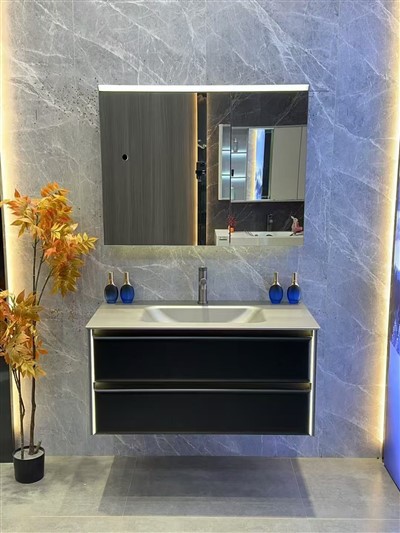


A solid wood bathroom vanity is a premium bathroom cabinet constructed entirely from natural timber - typically oak, maple, birch, or rubberwood - offering superior durability, repairability, and aesthetic warmth compared to engineered wood alternatives. Solid wood construction provides exceptional screw-holding capacity, moisture resistance with proper finishing, and the ability to be refinished, giving it a functional lifespan of 20+ years. For B2B buyers, solid wood bathroom vanities represent the premium tier of the market, commanding higher price points and delivering greater customer satisfaction. This guide covers wood species selection, manufacturing processes, finishing systems, quality standards, and sourcing strategies for B2B buyers.
What Makes Solid Wood Superior for Bathroom Vanities?
The bathroom environment presents unique challenges for cabinetry: high humidity, temperature fluctuations, water exposure, and frequent cleaning. Solid wood, when properly selected, dried, and finished, outperforms all engineered wood alternatives (MDF, particleboard, plywood) in these demanding conditions. Understanding why requires examining the structural and physical properties that distinguish solid wood from engineered alternatives.
Structural Advantages of Solid Wood Construction
Screw-holding capacity: Solid wood retains fasteners 3-4 times more effectively than particleboard, ensuring hinges, drawer slides, and hardware remain secure over decades of use.
Moisture resistance: Properly sealed solid wood does not delaminate, swell, or disintegrate when exposed to humidity - failures common in MDF and particleboard.
Repairability: Unlike laminated surfaces, solid wood can be sanded, patched, and refinished, extending product lifespan and reducing warranty replacements.
Structural integrity: Solid wood frames and panels resist warping and racking, maintaining door alignment and drawer operation over the product lifecycle.
Weight-bearing capacity: Solid wood supports heavy stone countertops without sagging or structural failure.
Solid Wood vs. Engineered Wood: A B2B Comparison
|
Property |
Solid Wood |
Plywood |
MDF/Particleboard |
|
Screw-holding |
Excellent |
Good |
Poor to moderate |
|
Moisture resistance |
Excellent (sealed) |
Good |
Poor (swells) |
|
Repairability |
Excellent (refinishable) |
Limited |
Not repairable |
|
Expected lifespan |
20+ years |
10-15 years |
5-10 years |
|
Warranty exposure |
Low |
Moderate |
High |
|
Market positioning |
Premium |
Mid-range |
Budget |
Wood Species for Bathroom Vanities: Detailed Comparison
Selecting the right wood species is the single most important decision in solid wood bathroom vanity manufacturing. Each species offers distinct characteristics in hardness, grain pattern, color, stability, and cost. For B2B buyers, understanding these differences enables informed product specification and competitive positioning.
Oak: The Industry Standard
Oak - both red oak and white oak - is the most widely used solid wood for bathroom vanities. White oak, in particular, has emerged as the leading species for 2026-2027, driven by its clean, contemporary appearance and excellent moisture resistance. White oak's cellular structure includes tyloses that naturally block water penetration, making it inherently more water-resistant than red oak - a critical advantage in bathroom applications.
Hardness (Janka): White oak 1,360 lbf; Red oak 1,290 lbf
Grain: Prominent, open grain with distinctive ray fleck pattern
Color: White oak ranges from light straw to medium brown; red oak has pinkish-red undertones
Staining: Accepts stains well, from natural to dark espresso
Cost: Moderate - widely available and competitively priced
Best for: Modern, transitional, and contemporary bathroom vanity designs
Maple: Smooth and Versatile
Maple is a hard, dense wood with a smooth, uniform surface that makes it ideal for painted finishes. Its tight grain and light color provide an excellent base for white, gray, and sage green finishes that align with 2026-2027 color trends. Maple's hardness (Janka 1,450 lbf) exceeds oak, providing exceptional dent resistance.
Hardness (Janka): 1,450 lbf - harder than oak
Grain: Tight, closed grain with minimal figure
Color: Creamy white to light reddish-brown
Staining: Excellent for painted finishes; less ideal for dark stains due to blotching
Cost: Moderate to high
Best for: Painted bathroom vanities, transitional designs, healthcare and commercial applications
Walnut: Premium Luxury
Walnut is the premium wood species for luxury bathroom vanities, prized for its rich chocolate-brown color and swirling grain patterns. Walnut's natural beauty requires no stain - a clear coat or oil finish enhances its inherent character. For high-end residential and boutique hospitality projects, walnut bathroom vanities command the highest price points and strongest perceived value.
Hardness (Janka): 1,010 lbf - softer than oak but adequate for cabinetry
Grain: Straight to wavy, with occasional curly or burl figure
Color: Rich chocolate brown to purplish-brown
Staining: Typically finished natural or with light oil; staining is uncommon
Cost: High - premium pricing reflects scarcity and demand
Best for: Luxury residential, boutique hotels, executive bathrooms
Birch and Rubberwood: Economical Alternatives
Birch and rubberwood offer cost-effective alternatives for B2B buyers seeking solid wood construction at accessible price points. Birch provides a smooth surface suitable for painting, while rubberwood - a sustainable plantation species - offers excellent stability and moderate hardness at competitive pricing.
Birch hardness: 1,260 lbf; Rubberwood hardness: 980 lbf
Birch color: Pale yellow to light reddish-brown; Rubberwood color: Light cream to straw
Best for: Mid-range bathroom vanities, budget-conscious commercial projects, multifamily housing
The Solid Wood Bathroom Vanity Manufacturing Process
Understanding the manufacturing process helps B2B buyers evaluate manufacturer capabilities and quality standards. A properly manufactured solid wood bathroom vanity passes through multiple precision stages, each of which affects the final product's durability, appearance, and consistency.
Stage 1: Lumber Selection and Drying
The manufacturing process begins with lumber selection. Premium manufacturers like LEVI Decor source kiln-dried lumber with moisture content between 8% and 12% - the critical range for bathroom cabinetry. Lumber that is too wet will warp and crack after manufacturing; lumber that is too dry may become brittle. Each board is inspected for knots, splits, and grain defects that could compromise structural integrity or appearance.
Stage 2: Machining and Component Preparation
Kiln-dried lumber is machined into cabinet components - panels, rails, stiles, and frames - using precision woodworking equipment. CNC routing ensures dimensional accuracy within 0.5mm tolerance, critical for consistent door and drawer alignment across production runs. Panel joints are machined for mortise-and-tenon or dowel construction, which provides superior strength compared to butt joints or pocket screws.
Stage 3: Assembly
Cabinet assembly joins components using adhesives and mechanical fasteners. Premium bathroom vanity manufacturers use waterproof adhesives (such as polyurethane or resorcinol glue) at all joints, ensuring the cabinet withstands bathroom humidity. Drawer boxes are typically constructed with dovetail joints - the strongest and most durable joinery method - and feature full-extension ball-bearing slides for smooth operation under load.
Stage 4: Surface Preparation and Finishing
Surface preparation involves sanding through multiple grit progressions (typically 120, 150, 180, and 220 grit) to achieve a smooth, uniform surface. The finishing system is critical for bathroom vanities, as it provides the primary moisture barrier. Premium manufacturers apply multi-coat finishing systems:
Sealer coat: Penetrates wood fibers and creates a base for topcoats
Sanding sealer: Fills grain and provides a sandable surface
Color coat (if stained): Even color application across all surfaces
Topcoat: UV-cured conversion varnish or polyurethane for maximum moisture and chemical resistance
Number of coats: Premium vanities receive 4-6 coats; standard vanities receive 2-3 coats
Stage 5: Hardware Installation and Quality Control
After finishing, hardware - hinges, drawer slides, handles, and knobs - is installed and tested. Quality control inspectors verify door alignment, drawer operation, finish quality, dimensional accuracy, and hardware functionality. Each vanity is compared to approved samples to ensure consistency across production runs.
Finishing Systems: The Critical Moisture Barrier
The finishing system is the single most important factor in solid wood bathroom vanity longevity. Even the highest-quality wood will fail in a bathroom environment without proper finishing. For B2B buyers, understanding finishing options enables informed specification and quality verification.
Finishing Options Compared
|
Finish Type |
Water Resistance |
Durability |
Best For |
|
Conversion Varnish |
Excellent |
Excellent (commercial grade) |
Hotels, commercial, luxury residential |
|
Polyurethane |
Very Good |
Very Good |
Residential, mid-range commercial |
|
Water-based lacquer |
Good |
Good |
Budget residential, eco-focused projects |
|
Natural oil |
Moderate |
Moderate (requires reapplication) |
Design-focused luxury, organic aesthetic |
For B2B commercial projects, conversion varnish is the recommended finishing system. This catalyzed finish creates a cross-linked molecular structure that provides superior resistance to water, chemicals, and abrasion - essential for hotel and hospitality applications where vanities face rigorous daily use and aggressive cleaning protocols. Leading manufacturers like LEVI Decor apply UV-cured conversion varnish with 4-6 coats for commercial-grade protection.
Quality Standards: What B2B Buyers Should Verify
Verifying quality standards is essential when sourcing solid wood bathroom vanities. B2B buyers should establish clear quality criteria and verify compliance through samples, factory audits, and production inspections.
Critical Quality Indicators
Moisture content: Lumber must be kiln-dried to 8-12% moisture content before manufacturing.
Joinery: Dovetail drawer joints and mortise-and-tenon or dowel cabinet joints indicate quality construction.
Finish thickness: Premium vanities should have 4-6 coats of finish with measurable film build.
Hardware grade: Full-extension ball-bearing drawer slides and soft-close hinges are standard for quality vanities.
Door alignment: Doors and drawers must align within 1mm tolerance across all units in a production run.
CARB compliance: Wood products must meet CARB Phase 2 formaldehyde emission standards for the U.S. market.
Water resistance test: Finished surfaces should withstand 24-hour water exposure without whitening or blistering.
Sourcing Solid Wood Bathroom Vanities: B2B Strategy
Sourcing solid wood bathroom vanities requires a manufacturing partner with specific expertise in solid wood processing - not all bathroom vanity manufacturers have the equipment, skills, or quality systems to produce premium solid wood products. B2B buyers should evaluate potential manufacturers against the criteria outlined above and request physical samples to verify quality.
Why LEVI Decor for Solid Wood Bathroom Vanities
LEVI Decor, with 14 years of solid wood bathroom vanity manufacturing experience and a 10,000-square-meter factory in Hangzhou, China, offers B2B buyers a comprehensive manufacturing partnership:
Full solid wood capabilities: Oak (white and red), maple, walnut, birch, and rubberwood
Precision manufacturing: CNC-machined components with 0.5mm tolerance
Premium finishing: UV-cured conversion varnish with 4-6 coat systems
Quality systems: Multi-stage QC from lumber inspection to final product testing
OEM/ODM services: Custom dimensions, finishes, hardware, and branding
Flexible MOQ: Starting from 10 units with no minimum for samples
Rapid prototyping: From sketch to sample in 7-15 days
24/7 dedicated support with personalized account managers
Frequently Asked Questions
Is solid wood good for bathroom vanities?
Yes, solid wood is an excellent material for bathroom vanities when properly dried, constructed, and finished. Solid wood offers superior screw-holding capacity, moisture resistance (with proper finishing), repairability, and structural integrity compared to engineered wood alternatives. A well-manufactured solid wood bathroom vanity can last 20+ years, making it the preferred choice for premium residential and commercial applications.
What is the best wood for a bathroom vanity?
White oak is the best overall wood species for bathroom vanities due to its natural moisture resistance (tyloses block water penetration), hardness (Janka 1,360 lbf), attractive grain, and competitive pricing. Walnut is the best choice for luxury applications where its rich color and premium aesthetic justify higher cost. Maple is ideal for painted finishes, while birch and rubberwood offer economical solid wood options for budget-conscious projects.
How long do solid wood bathroom vanities last?
A properly manufactured and finished solid wood bathroom vanity typically lasts 20+ years. Key factors determining lifespan include wood species, moisture content at manufacturing, joinery quality, finishing system, and hardware grade. Premium vanities with conversion varnish finishes, dovetail drawer joints, and full-extension slides offer the longest service life. Unlike MDF or particleboard vanities, solid wood vanities can be refinished to extend their lifespan further.
How do I verify solid wood bathroom vanity quality when sourcing from China?
Request physical samples to verify wood species, finish quality, joinery, and hardware. Check moisture content (should be 8-12%), examine drawer joints for dovetails, test finish water resistance, and verify CARB compliance documentation. Conduct factory audits or hire third-party inspection services. Leading manufacturers like LEVI Decor welcome buyer inspections and provide samples with no minimum order quantity.
Can solid wood bathroom vanities be customized for OEM projects?
Yes, solid wood bathroom vanities offer extensive customization options for OEM projects. Buyers can specify wood species, dimensions, door styles (shaker, flat-panel, raised-panel), finishes (natural, stained, painted), hardware, and branding. LEVI Decor offers full OEM services with custom dimensions, finishes, edge profiles, and brand-specific packaging, with sample turnaround in 7-15 days and MOQ from 10 units.
What finish is best for solid wood bathroom vanities?
Conversion varnish is the best finish for solid wood bathroom vanities, particularly for commercial applications. This catalyzed finish creates a cross-linked molecular barrier that provides superior resistance to water, chemicals, and abrasion. For residential applications, polyurethane offers very good protection. Natural oil finishes provide an organic aesthetic but require periodic reapplication and offer less moisture protection.
About LEVI Decor
LEVI Decor is a leading solid wood bathroom vanity manufacturer based in Hangzhou, China. With 14 years of experience and a 10,000-square-meter factory, we provide comprehensive OEM/ODM solid wood bathroom vanity solutions across oak, maple, walnut, birch, and rubberwood species. Visit www.levi-bathroom.com to start your custom project today.